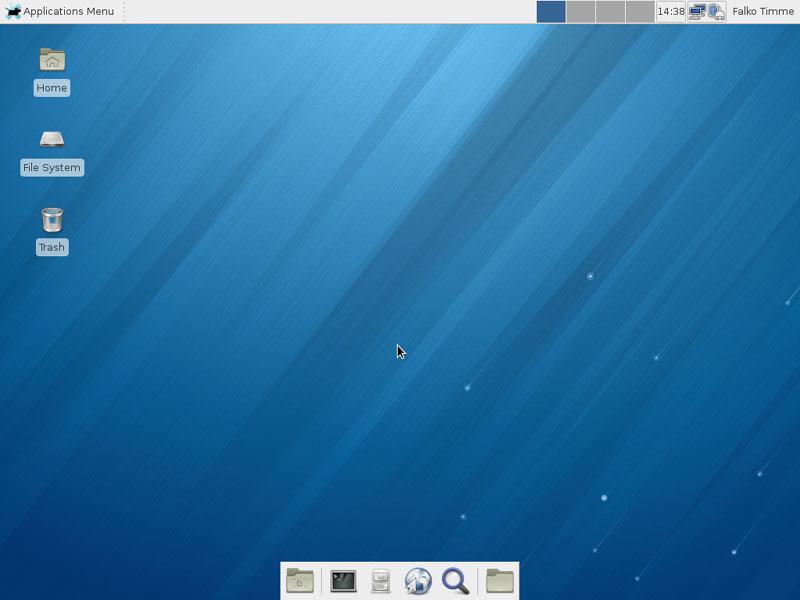
The Perfect Desktop - Fedora 18 XFCE
This tutorial shows how you can set up a Fedora 18 desktop (with the XFCE desktop environment) that is a full-fledged replacement for a Windows desktop, i.e. that has all the software that people need to do the things they do on their Windows desktops. The advantages are clear: you get a secure system without DRM restrictions that works even on old hardware, and the best thing is: all software comes free of charge.
The software I propose as default is the one I found easiest to use and best in their functionality - this won't necessarily be true for your needs, thus you are welcome to try out the applications listed as alternatives.
I do not issue any guarantee that this will work for you!
1 Preliminary Note
To fully replace a Windows desktop, I want the Fedora desktop to have the following software installed:
Graphics:
- Pinta - open source drawing application modeled after Paint.NET
- KolourPaint - paint application with elemental functions
- MyPaint - paint application with a large variety of brushes
- The GIMP - free software replacement for Adobe Photoshop
- Shotwell Photo Manager - full-featured personal photo management application for the GNOME desktop
Internet:
- Firefox
- Opera
- Chromium - Google's open-source browser
- Thunderbird - email and news client
- Evolution - combines e-mail, calendar, address book, and task list management functions
- Transmission BitTorrent Client - Bittorrent client
- Deluge - free cross-platform BitTorrent client
- Vuze - Java BitTorrent client
- qBittorrent - free alternative to µtorrent
- Marble - desktop globe similar to google earth
- GoogleEarth - Google's desktop globe
- Flash Player
- FileZilla - multithreaded FTP client
- Pidgin IM Client - multi-platform instant messaging client
- Skype
- Dropbox Client - cloud storage
- Gwibber Social Client - open-source microblogging client (Twitter, Facebook, etc.)
Office:
- ePDFViewer - PDF reader
- Evince - document viewer
- Okular - document viewer
- LibreOffice Writer - replacement for Microsoft Word
- LibreOffice Calc - replacement for Microsoft Excel
- GnuCash - double-entry book-keeping personal finance system, similar to Quicken
- Scribus - open source desktop publishing (DTP) application
Sound & Video:
- Banshee - audio player, can encode/decode various formats and synchronize music with Apple iPods
- Amarok - audio player
- MPlayer - media player (video/audio), supports WMA
- Rhythmbox Music Player - audio player, similar to Apple's iTunes, with support for iPods
- gtkPod - software similar to Apple's iTunes, supports iPod, iPod nano, iPod shuffle, iPod photo, and iPod mini
- Sound Juicer CD Extractor - CD ripping tool, supports various audio codecs
- Nightingale - audio player similar to Winamp, but not yet as feature rich (Songbird fork)
- XMMS - audio player similar to Winamp
- Clementine - Amarok 1.4 fork
- Exaile - audio player
- VLC Media Player - media player, plays all kinds of videos (video/audio)
- Totem - media player (video/audio)
- Xine - media player, supports various formats; can play DVDs
- Winff - free video converter
- SoundConverter - free audio converter
- Xfburn - CD/DVD burning program
- Brasero - CD/DVD burning program
- K3B - CD/DVD burning program
- Audacity - free, open source, cross platform digital audio editor
- dvd::rip - full featured DVD copy program
- Multimedia Codecs
Programming:
- KompoZer - WYSIWYG HTML editor, similar to Macromedia Dreamweaver, but not as feature-rich (yet)
- Bluefish - text editor, suitable for many programming and markup languages
- Eclipse - Extensible Tool Platform and Java IDE
Other:
- VirtualBox - lets you run your old Windows desktop as a virtual machine under your Linux desktop, so you don't have to entirely abandon Windows
- TrueType fonts
- Java
- Read-/Write support for NTFS partitions
- leafpad - simple text editor
Part of our desired applications are available in the Fedora repositories, and some of these applications have been contributed by the community. Many have to be downloaded from their homepages.
The software provided in the above list covers most of the basic tasks one may need to do on their desktop computers, sometimes there are multiple choices for same functionality. If you know which one you like best, you obviously don't need to install and test the other applications, however if you like choice, then of course you can install more than one.
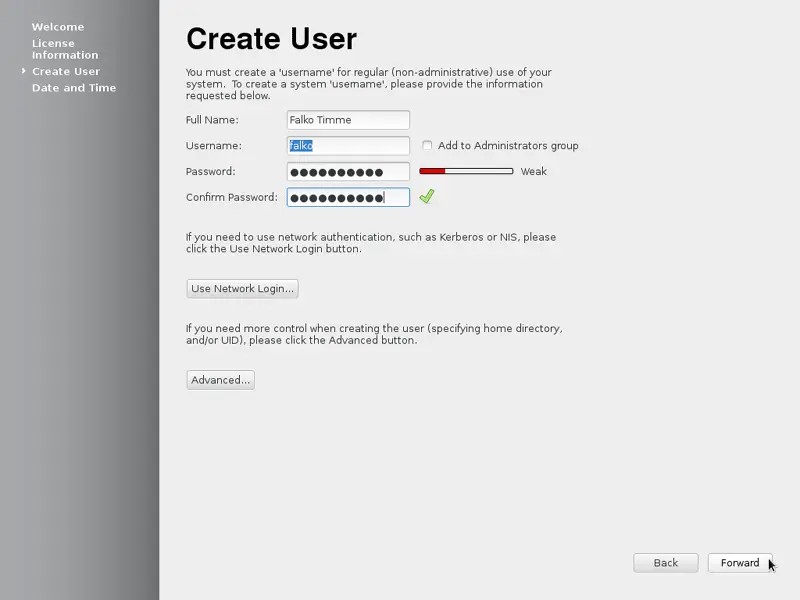
I will use the username falko in this tutorial. Please replace it with your own username.
2 Installing The Base System
The installation of the base system is easy as 1-2-3 because the Fedora installer doesn't offer a lot of options to choose from, so you cannot go wrong.
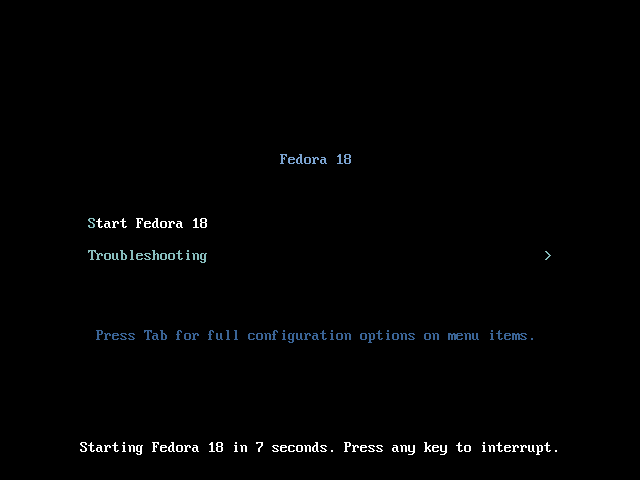
Download the Fedora 18 XFCE Spin iso image from http://fedoraproject.org/en/get-fedora-options, burn it onto a disk, and boot your computer from it:
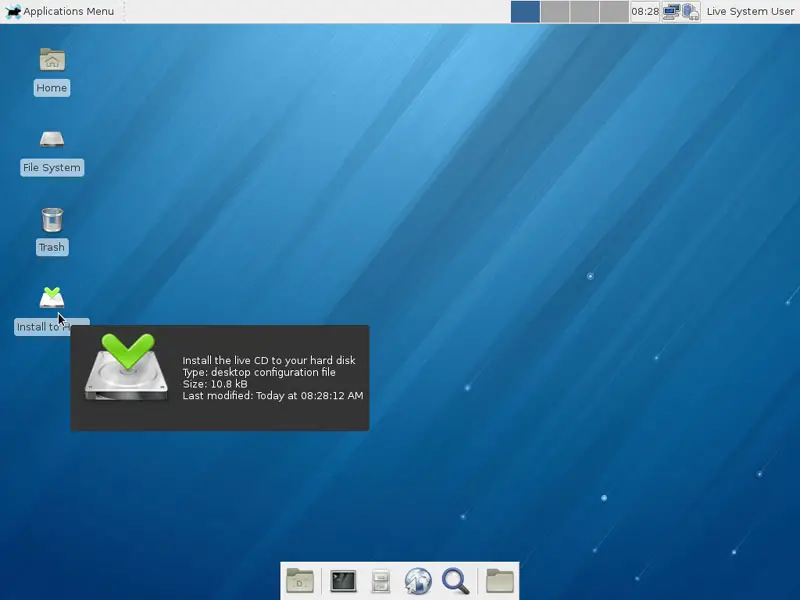
Install by clicking Install to Hard Drive:
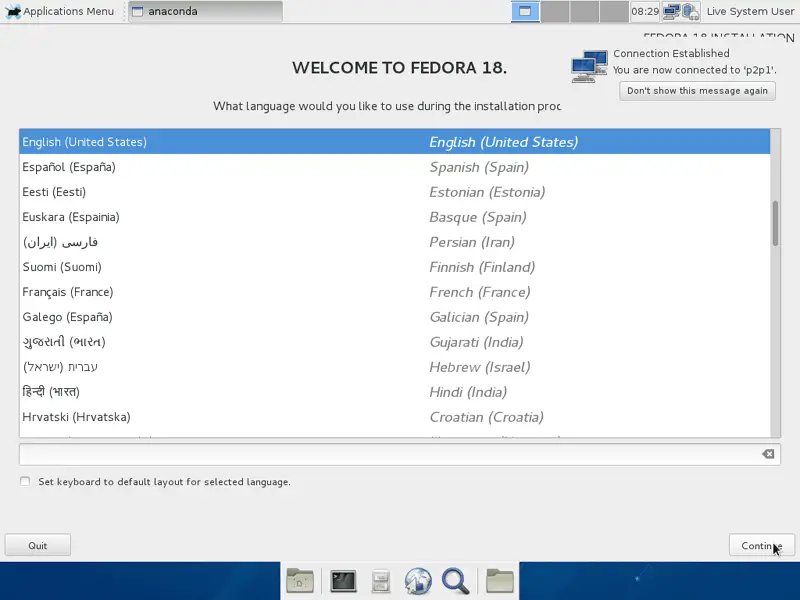
Select your language:
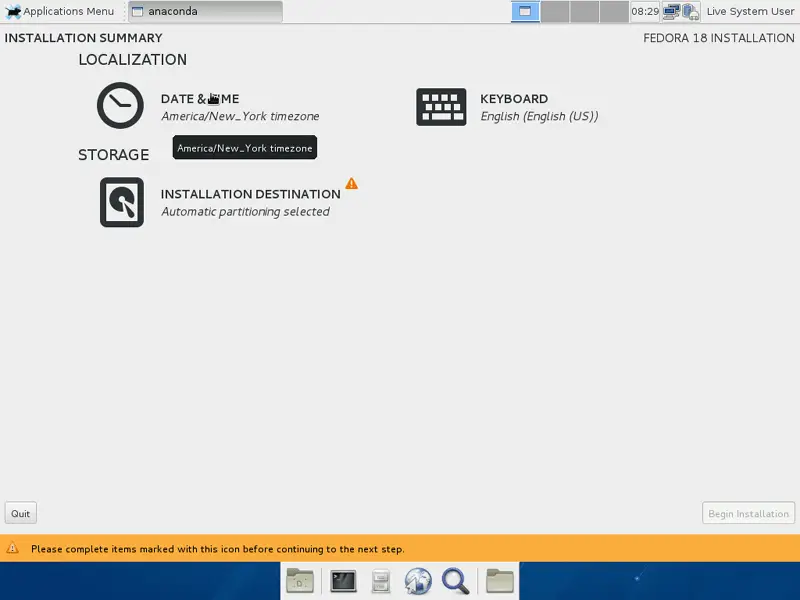
Before we start the installation, we must check (and maybe adjust) a few settings. Click on DATE & TIME if you wish to choose another timezone than the one that is shown:
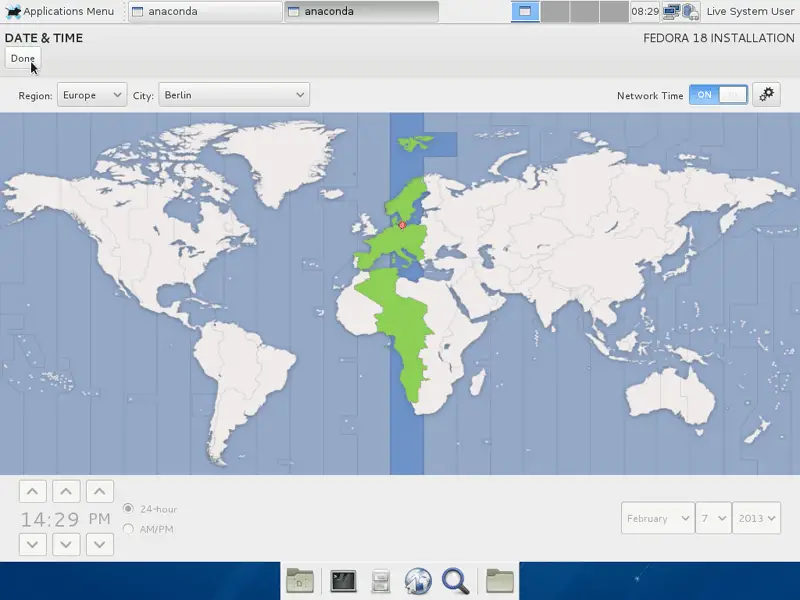
Select the correct timezone and click on Done (in the upper left corner):
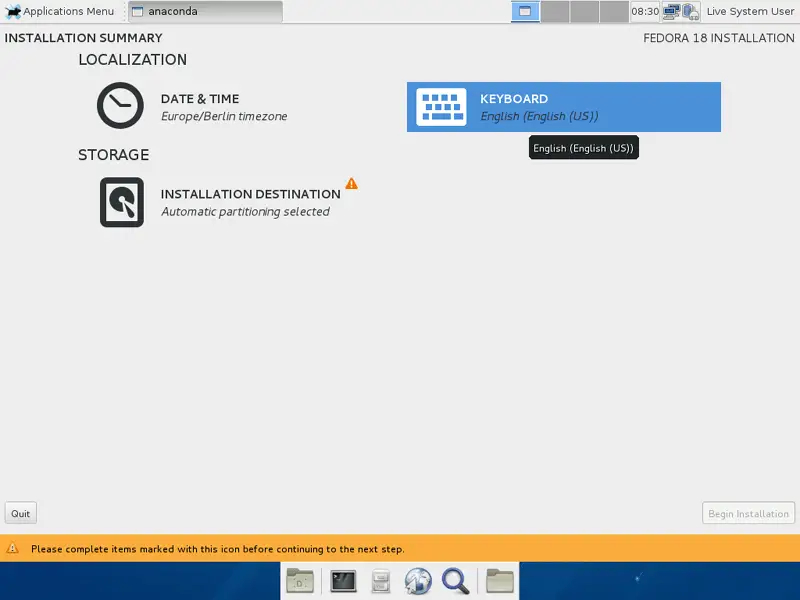
Next you may wish to change the keyboard layout - to do so, click on KEYBOARD:
Click on the + button and select a new keyboard layout:
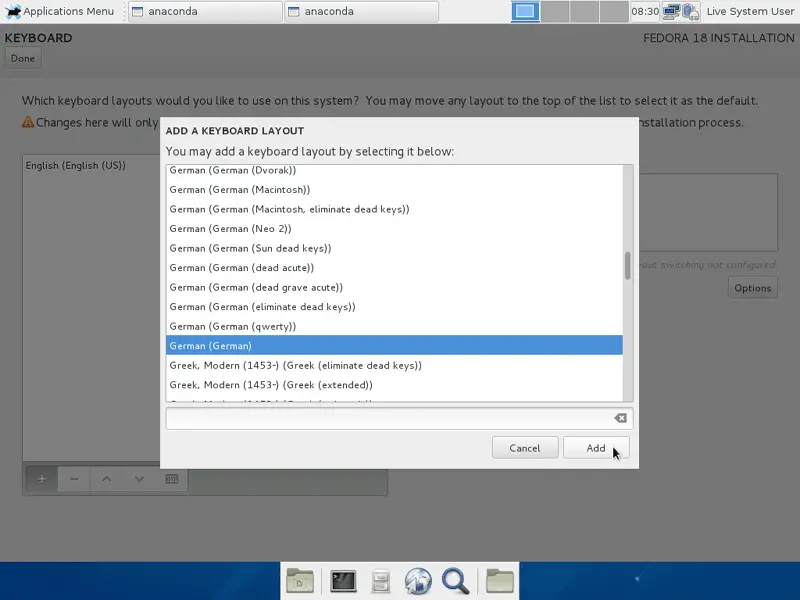
To make sure the system really uses the correct keyboard layout, you should remove any keyboard layout from the list (by clicking the - button) that you don't need:
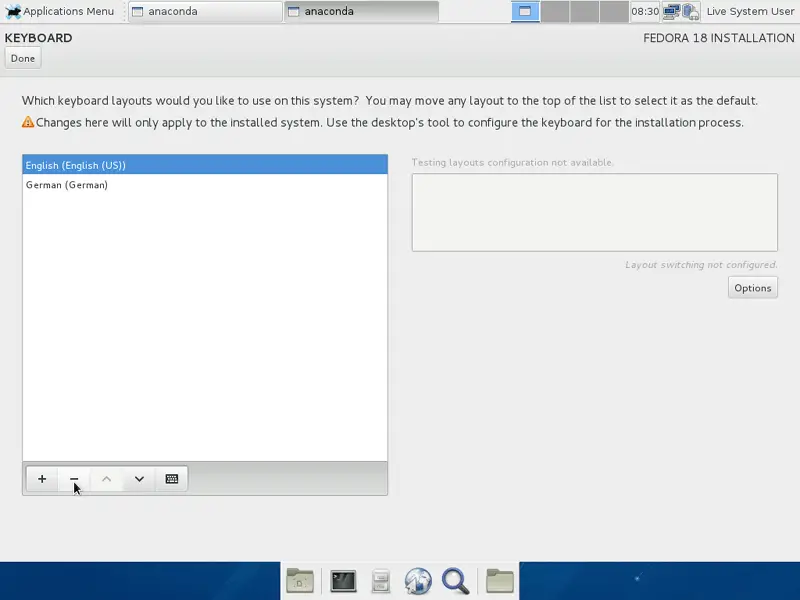
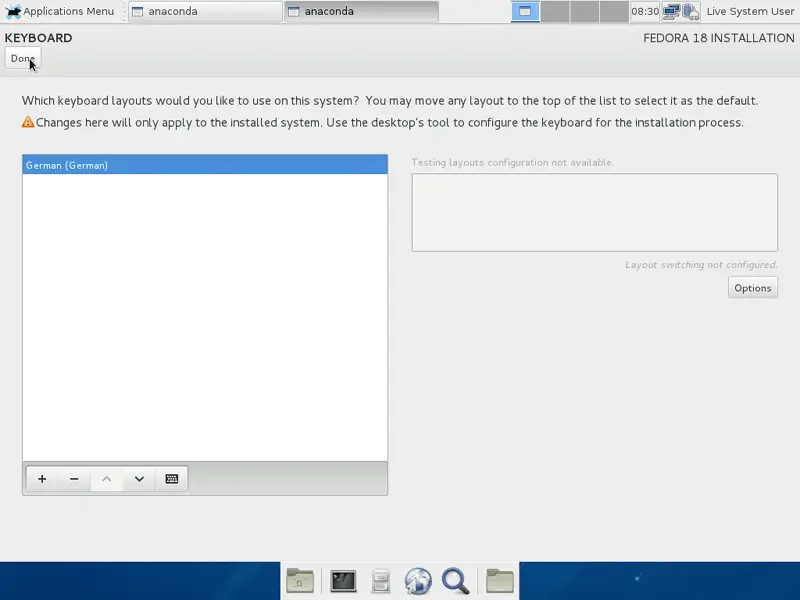
Click on Done afterwards:
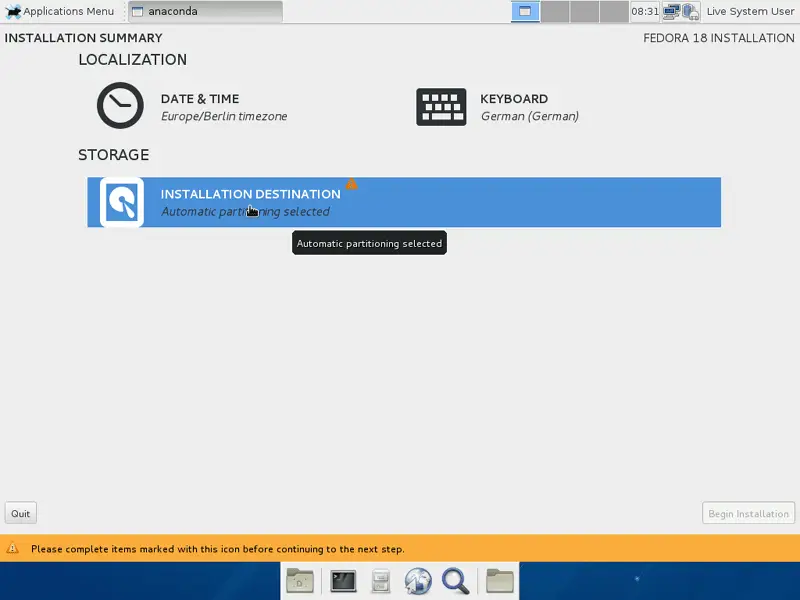
Now we come to the partitioning. Click on INSTALLATION DESTINATION:
Select your hard drive and click on Continue:
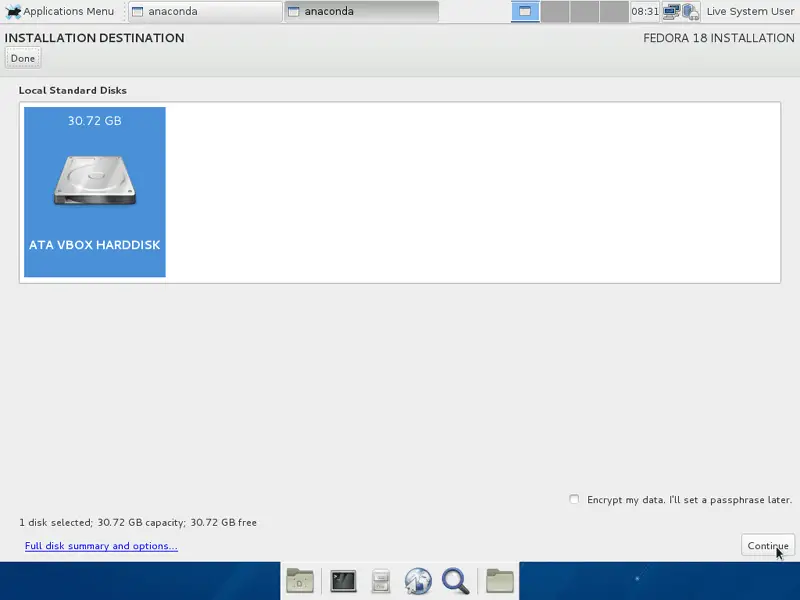
The default partitioning is ok, so you can hit Continue:
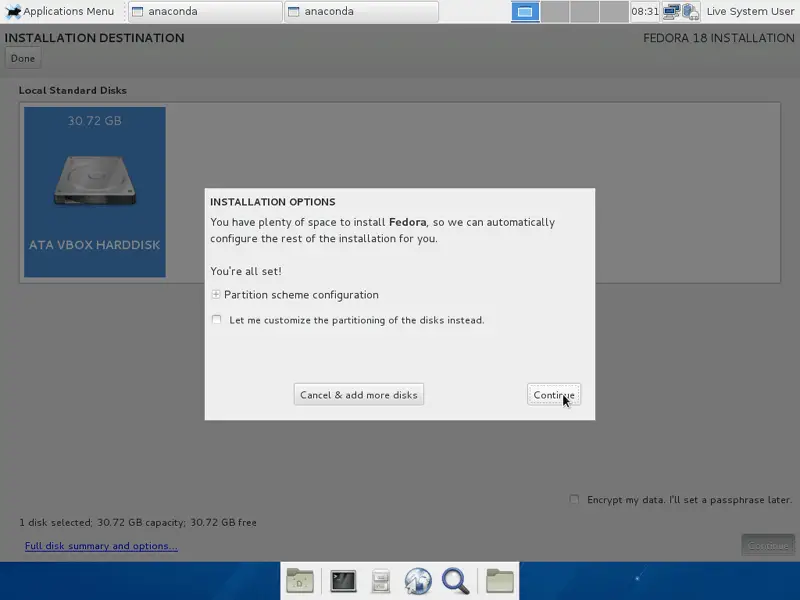
Back on the INSTALLATION SUMMARY screen, click on Begin Installation:
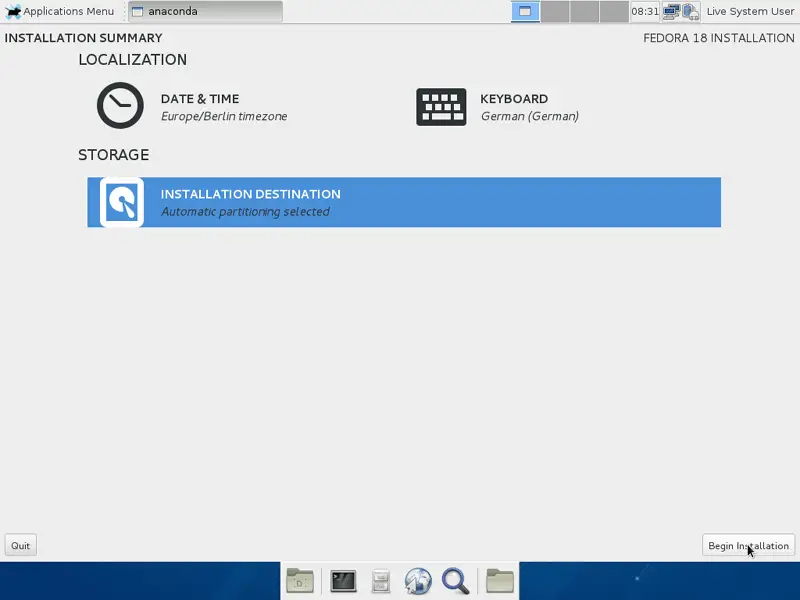
The installation starts. Click on ROOT PASSWORD to set a password for the root account:
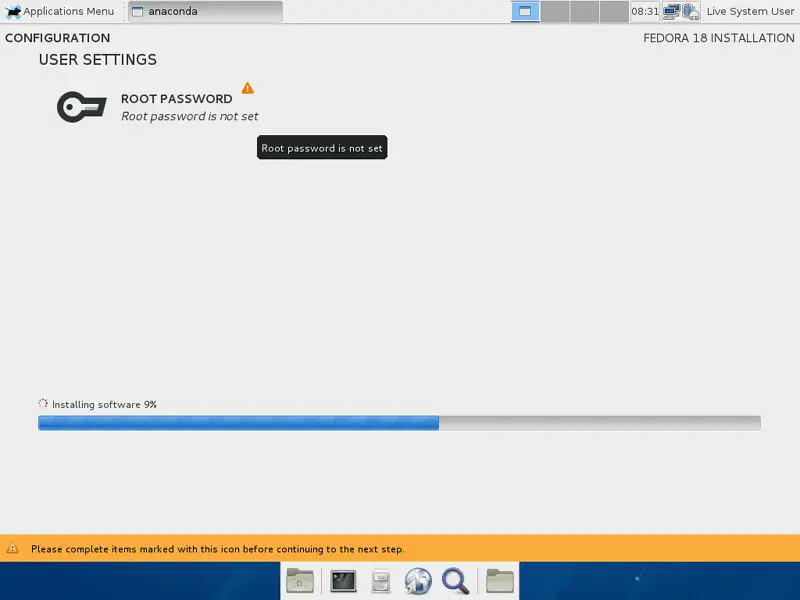
Type in a root password (twice to verify it) and click on Done:
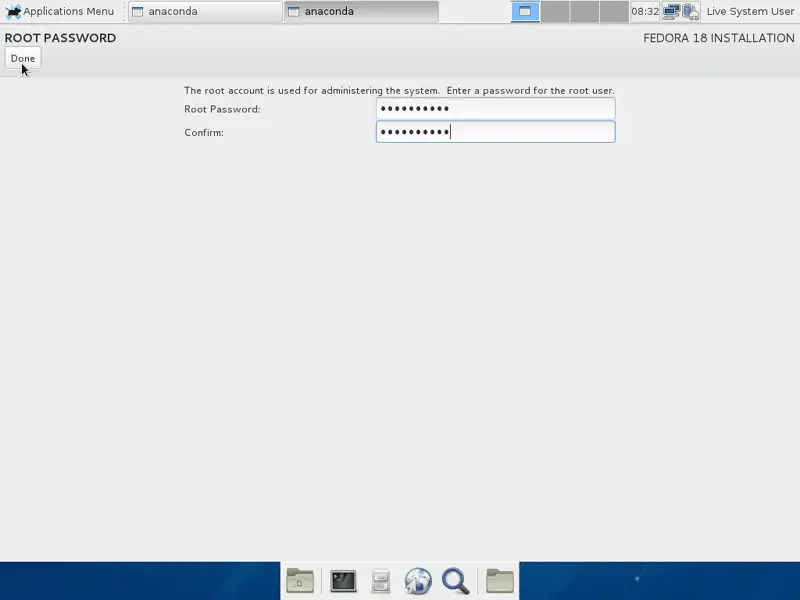
Installation continues:
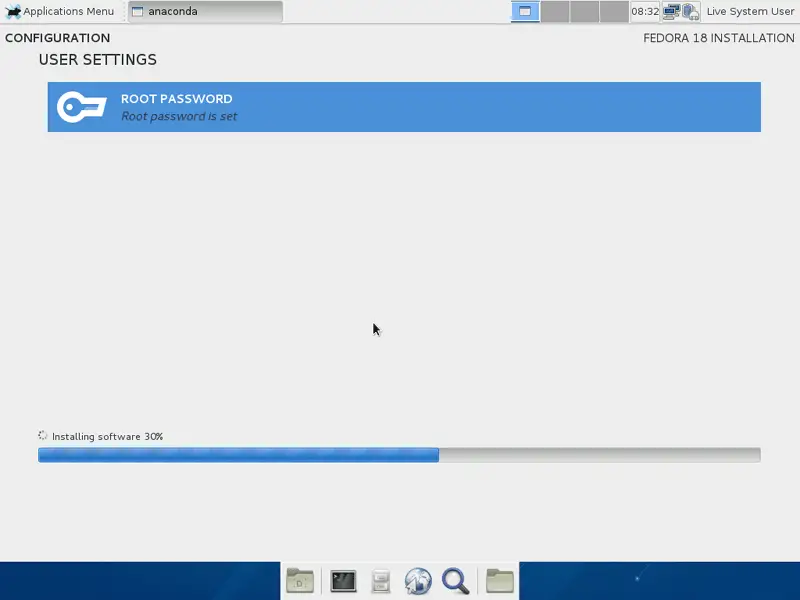
The installation is complete. Click on Quit:
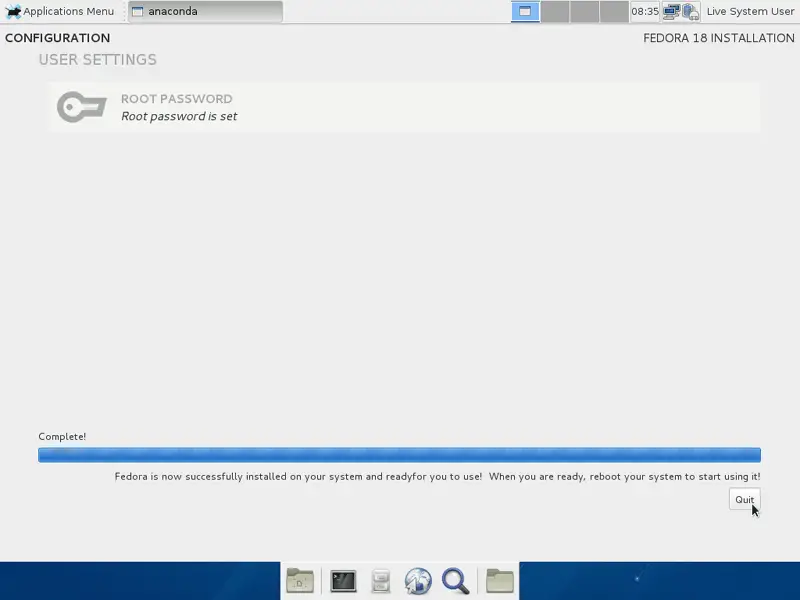
Now log out of the live desktop...
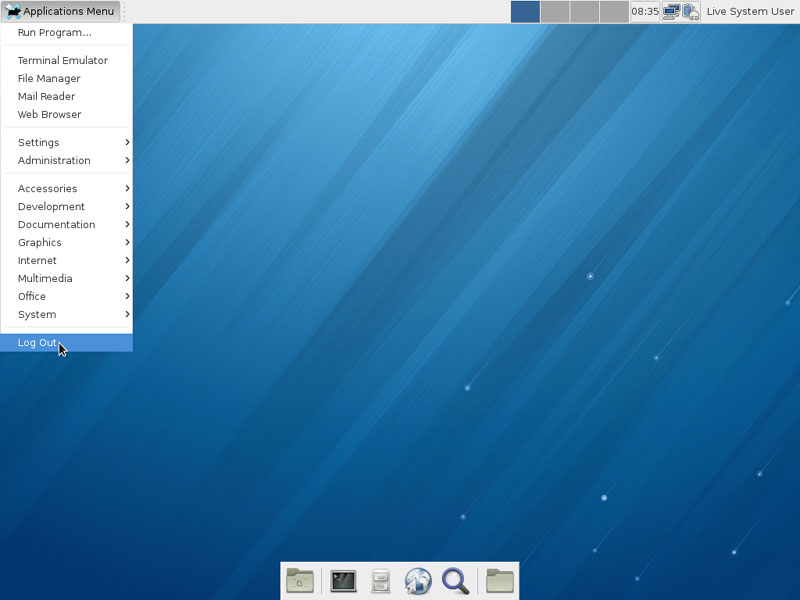
... and select Restart (don't forget to remove the Live CD from the disk drive before the system boots again):
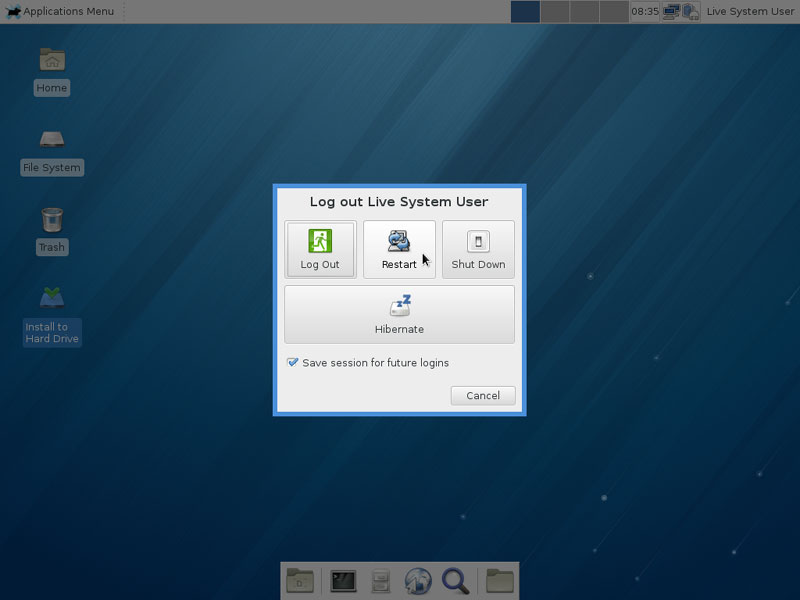
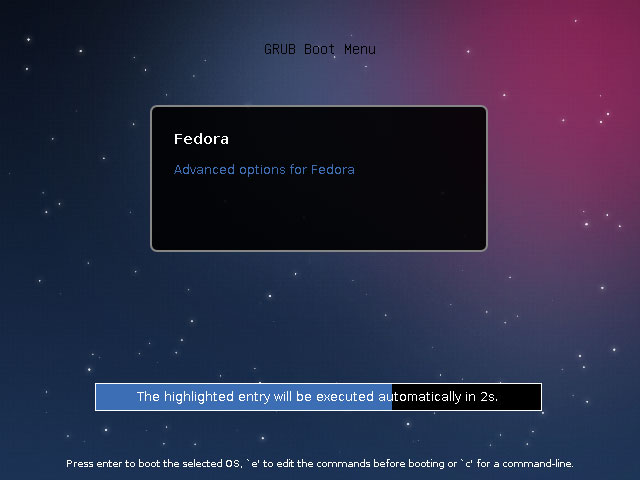
This is the boot menu of your Fedora 18 system:
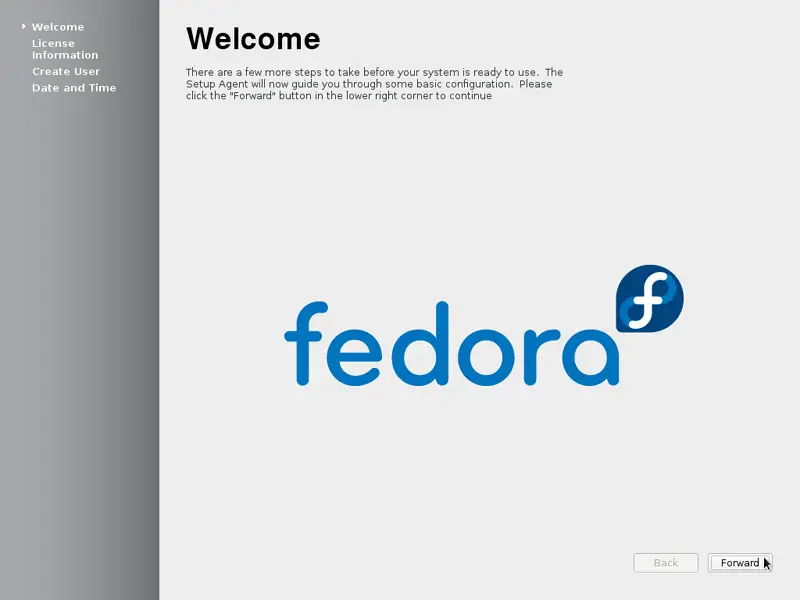
If the system is booting for the first time, the first boot wizard comes up. Click on Forward...
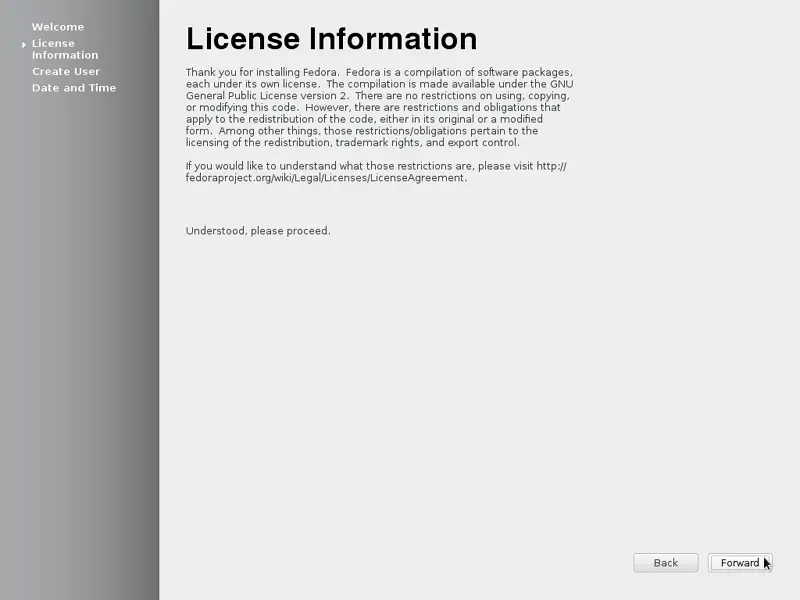
Read the License information and proceed:
Then add a regular user account to the system (I will create the user falko here):
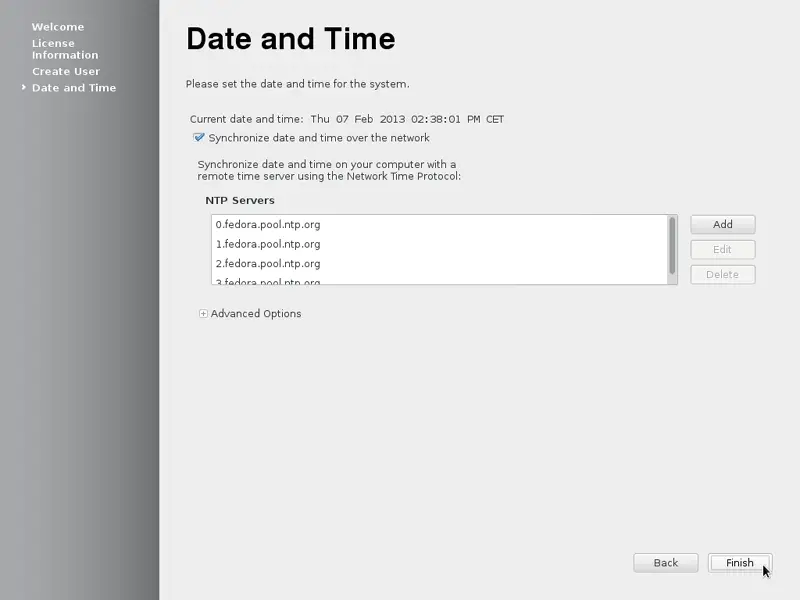
Set date and time. If you have internet access, it's a good idea to synchronize them over the network. Check the appropriate box if you want to do that and proceed:
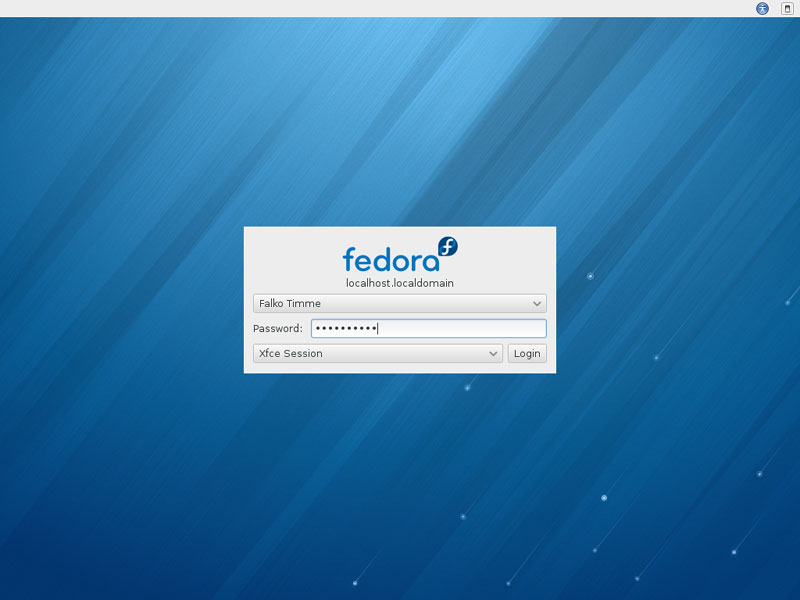
Now that we are finished with the first boot wizard, we can log into our new desktop with the user we've just created. The name that will be shown to you is not the username but the one you entered in the Full Name field:
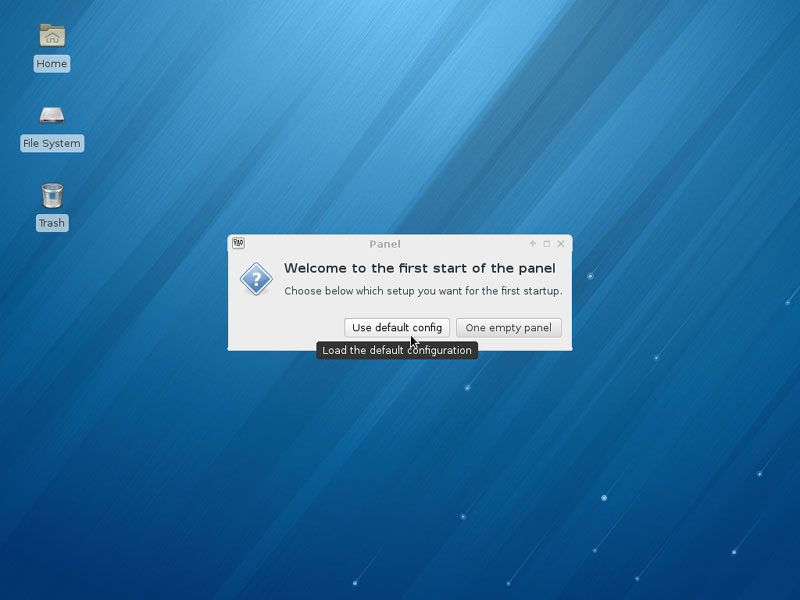
After the first login, choose Use default config:
This is what your new Fedora 18 XFCE desktop looks like: